
[Power BI] Connecting SharePoint Excel File to Power BI (Web version)


Requirement
: Auto-update of Power BI report when an excel file in SharePoint is updated.

Assumptions: Power BI is already installed. User has general knowledge in SharePoint and Power BI.

Level: Beginner

Connecting SharePoint Excel File

2. On the Power BI homepage, click Get data located on the lower left corner of the page. 


3. You will be given options where to get the data you will use in your report. Select Files.


4. From the displayed options, select SharePoint - Team Sites.


5. You will be asked to enter the URL to connect to. Enter the root URL of the SharePoint site where the excel file you will use is saved.


6. The list of SharePoint folders will be displayed. 


7. Select the excel file from the SharePoint list. Click Connect.


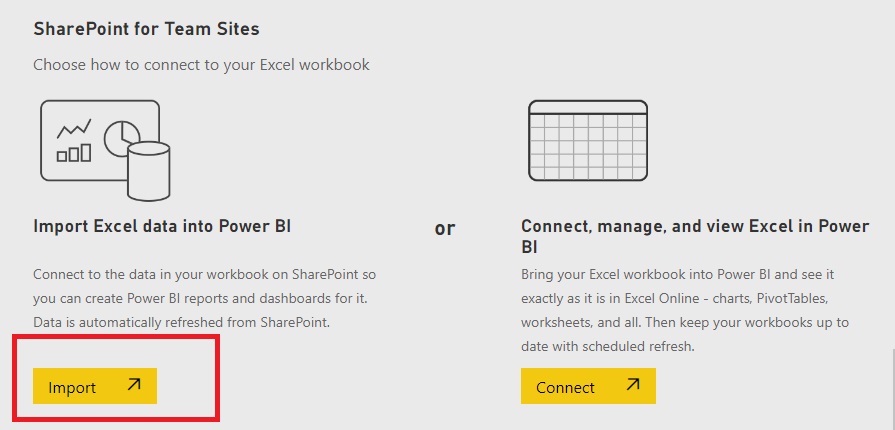
8. Click Import.

9. On the homepage, click Create and select Pick a published dataset.


10. Select the file that you want to use from the list and click Create.


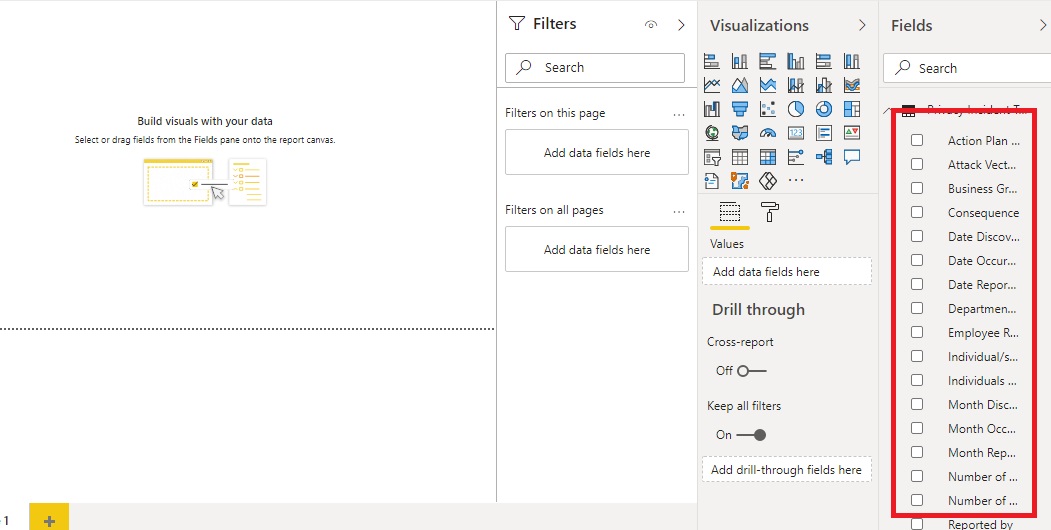
11. You are now ready to create a report from the excel data linked to SharePoint. Once you update the data in excel in SharePoint, changes will be reflected automatically in your Power BI report.


Comments

Popular posts from this blog

[Google Sheets] Linking Data to Cell Ranges, Sheets and Another Spreadsheet

Google sheets is part of Google Workspace that organizes data in columns and rows for reporting and data analysis. In this tutorial, you will learn how to link data within tabs, between multiple tabs and from one spreadsheet to another. Before you begin To get started, go to sheets.google.com and select "blank" to open a new blank sheet. Linking Data Below are the different ways to link data in google sheets: Linking within tabs Linking between multiple tabs Linking from one spreadsheet to another Linking data within tabs 1. Click anywhere on google sheets and type anything. 2. Right-click and select Insert link. 3. Click Select a range of cells to link. 4. The "Select a data range" box will appear. 5. Select another cell within a sheet where you want to link your data. 6. Click OK . 7. Verify the cell address before you click Apply . Linking data between mul...

[Microsoft Flow] How to Connect Microsoft Form Responses to Power BI

Requirement : Auto-import of data to Power BI when a new response in Microsoft Forms is submitted. Solution : Connect Microsoft Forms to Power BI through Microsoft Flow. Assumptions : Power BI is already installed. Microsoft Form is already created. Creating a Streaming Dataset 1. Sign into https://powerbi.microsoft.com. 2. On the Power BI homepage, click New under 'My workspace'.  3. Select Streaming dataset . 4. Select API and click Next . 5. Enter a name for your dataset. 6. Enter each question from MS Forms to 'Values from stream' in Power BI and select the type of the answer for each. 7. Click Create . 8. Turn on Historic data analysis and click Done . 9. When you click the name of your dataset under 'My workspace', you are now ready to create a Power BI report. Connecting MS Forms to Power BI 1. Log into https://flow.microsoft.com. 2. Click My flows in the left navigation bar. 3. Click New flow and select Automated cloud flow . 4. Before you create yo...

[SharePoint] Creating a List

SharePoint List provides flexible ways to store and display information in the form of a list similar to a database or spreadsheet. Assumptions : User has Full Control/Modify Access in SharePoint Intended Audience :  Someone new to SharePoint Online Level :  Beginner Creating a SharePoint List 1. In your SharePoint homepage, click the settings icon located on the upper right corner of the page. 2. Click Add a page . 3. From the list of SharePoint apps, select Custom List. 4. Enter a name for your list. Click Create . 5. You will see your new list in the gallery. 6. When you click the list, you will be redirected to the list page where you can edit the list settings. Creating a Column in a SharePoint List 1. You can directly create a column in your list by clicking the Add Column option.  2. Select your preferred column types from the list. 3. Enter the Name and Description of the column and click Save . 4. You can also create a column from the list settings.